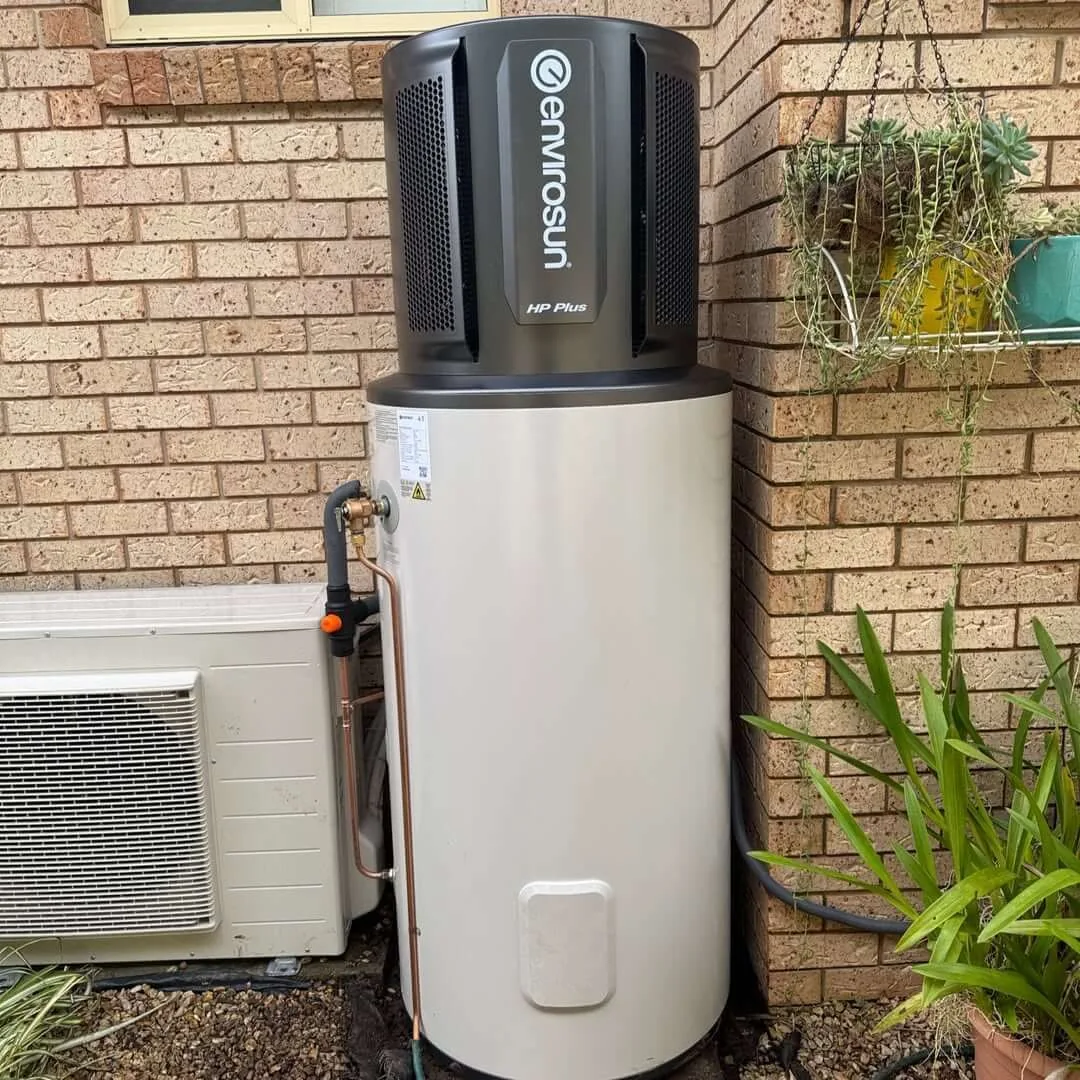
A heat pump moves heat from the air into your water, using less electricity than a conventional electric storage system. The right size, location and electricity tariff all matter when comparing running costs.
The hidden cost of an outdated hot water system.
That sinking feeling when you open the electricity bill? Your hot water system could be part of the picture. An older unit can keep working while using more energy than a newer, more efficient option.
Running costs are only one consideration. If the tank is leaking, the temperature is unreliable or the household regularly runs short, it is worth having the system assessed before deciding on a repair or replacement.
Start with the model, age if known and how much hot water your household uses. Our hot water team can discuss the fault and the options for your property.
Heat the water.
Use the air around you.
Instead of relying on an electric element to generate all the heat directly, a heat pump uses a refrigeration cycle to collect heat from the surrounding air and transfer it into stored water.
This can reduce electricity use compared with a conventional electric storage water heater. Actual bill savings depend on the system, household demand, climate, electricity tariff and how the unit is operated.
Further reading: Australian Government guidance on hot water systems ↗
The right fit matters as much as efficiency.
A heat pump still needs to suit the property. A tank that is too small may run out during periods of high demand. A larger system may be unnecessary for a smaller household.
- Your daily demand. Consider the number of people, showers and other hot water use.
- Installation space. Check airflow, access, noise and the location of existing connections.
- Electrical requirements. The selected model and installation determine what electrical work is needed.
- Reheating and boost. Recovery time and any backup element affect performance and running costs.
- The complete quote. Ask what installation, removal and any extra work the price includes.
For practical ways to reduce hot water demand, read our shower and household water-saving tips.
Some systems include a backup heating element. It can help during high demand or colder conditions, but it does not make stored hot water unlimited. Discuss the model and your household needs before choosing a unit.
The offer published with this guide.
These are the GST-inclusive installed prices advertised when this article was first published. Electrical work was excluded.
Historical offer. These prices and stock availability are not a current quote. Contact Jetty Plumbing to confirm today’s options and the complete installation cost for your property.
Request a current quoteCompare the options for your home.
Share the existing unit model, location and any faults, along with your household’s hot water needs. We can discuss the assessment and explain what a replacement installation would involve.
Explore our heat pump hot water services or send an enquiry to talk through the next step.

Practical advice from your Coffs Coast plumbing team. For advice about your own system, share the job details with us.
Meet the team →