Compare peak household demand, installation requirements, available energy sources and ongoing costs. System size and recovery matter as much as the heating method. Plan ahead where possible so a breakdown does not force a rushed decision.
How much hot water does your household need?
Headcount is a useful starting point, but it does not describe the whole household. Shower length, simultaneous use, baths, laundry habits and appliance connections can all affect demand.
Note when the current system runs short and whether that happens every day or only when several fixtures are used together. A change in performance may need a repair assessment before you decide to replace the unit.
Storage capacity, reheating speed and continuous-flow delivery are different measures. A plumber can help match the equipment to the busiest part of your day.
Compare purchase cost with day-to-day operation.
Electric storage systems heat water in an insulated tank. They can have a lower initial purchase cost than some alternatives, but the complete installation and running costs need comparison.
The electricity tariff and heating schedule matter. A system on a restricted or off-peak supply needs enough stored hot water for the periods between heating.
Check the available installation space, access and electrical requirements. Replacing the unit with a larger tank is not automatically the right answer if the existing problem is a failed component or a change in demand.
Check the site and the boosting arrangement.
A solar hot water system uses collectors to help heat stored water. A gas or electric booster provides additional heating when solar input is insufficient.
Roof space, orientation, shading and the system layout affect suitability. The tank may be mounted on the roof or at ground level, depending on the design.
Compare the complete installation cost, expected use of the booster and ongoing maintenance. Solar hot water does not guarantee free hot water every day, and the likely savings depend on the property and use.
Could a heat pump suit the property?
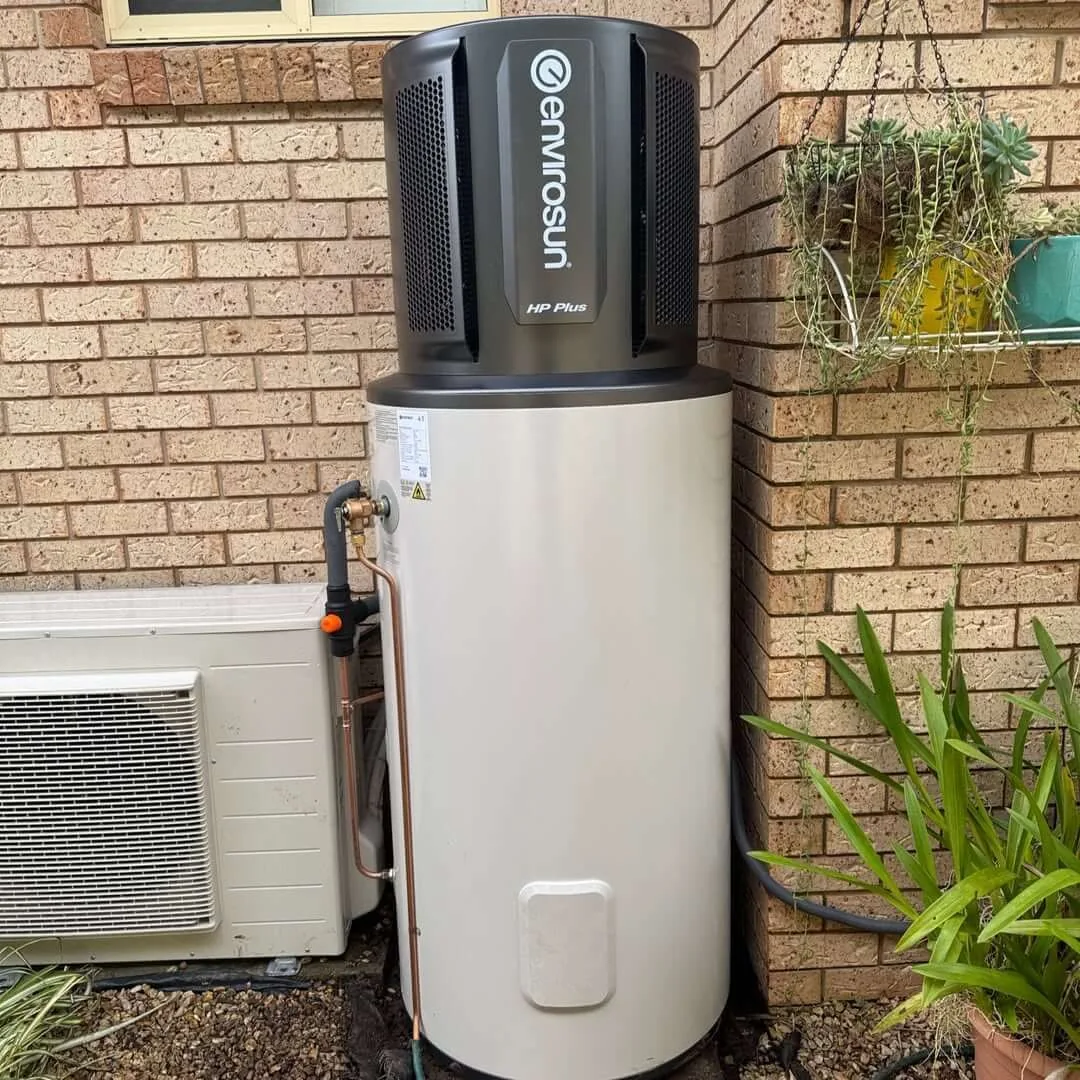
A heat pump transfers heat from the surrounding air into water. It can use less electricity than conventional electric resistance heating, but it still needs to suit the site and demand.
Consider recovery, airflow, equipment noise, available space and the unit’s operating requirements. Ask how the selected model would meet your household’s busiest period.
Gas storage and continuous-flow systems may also be options where an appropriate supply and installation arrangement are available. Compare the whole installation rather than assuming one energy source is always best.
Read our heat pump hot water guide or explore heat pump installations to discuss this option.
Look at installation, running costs and maintenance.
Ask for a quote that explains the equipment, removal of the old unit, changes to connections and any required electrical or gas work. Make sure you understand what is excluded.
- Daily operation. Compare the tariff, heating schedule and demand assumptions.
- Maintenance. Check servicing requirements for the specific unit.
- Warranty. Ask which components and installation work are covered and under what conditions.
- Incentives. Confirm current eligibility, approved equipment and any programme conditions before including a discount in your budget.
A preventative plumbing inspection can help assess related fixtures and accessible connections alongside equipment-specific servicing.
There is no guaranteed lifespan that applies to every installation. Water conditions, use, maintenance and the equipment itself affect performance over time.
Compare options before the old system fails.
If the unit is ageing, leaking or repeatedly losing hot water, arrange an assessment. Planning the work gives you time to compare suitable models and coordinate access.
Bring the current model details, installation location and household needs to the conversation. Tell the team if the water temperature has changed, the system makes unusual noises or you have noticed water around it.
For a fault or replacement, see our hot water service. You can also request a call back to discuss the options for your home.
Further reading: Australian Government hot water system guidance ↗.

Kyle leads the Jetty Plumbing team on the Coffs Coast. For advice about your own property, share the job details with us.
Meet Kyle and the team →